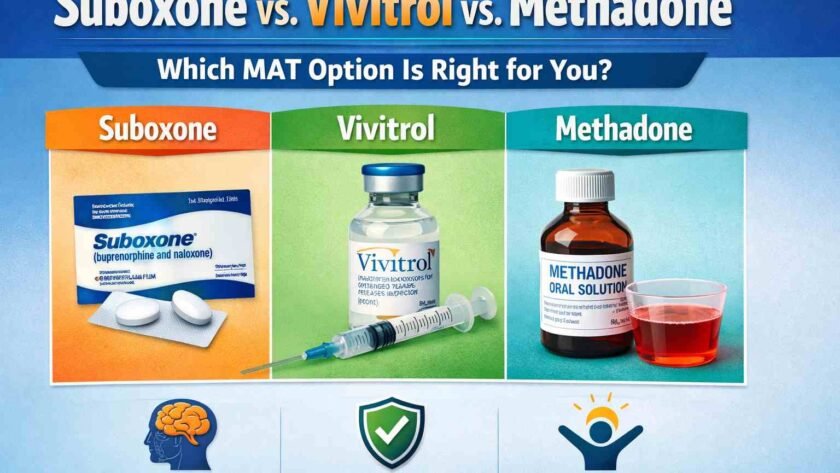
If you’re exploring treatment for opioid addiction, you may hear about Medication-Assisted Treatment (MAT) and feel unsure about what it really means—or which option is right for you. Suboxone, Vivitrol, and Methadone are the three most common MAT medications, but they work in very different ways.
Choosing between them isn’t about picking the “strongest” option or doing what others expect. It’s about finding the treatment that best supports your recovery, your health, and your life.
This guide explains the differences between Suboxone, Vivitrol, and Methadone, how each works, and what to consider when deciding which MAT option may be right for you.
What Is MAT and Why Does It Matter?
Medication-Assisted Treatment combines FDA-approved medication with therapy and behavioral support. MAT helps reduce cravings, ease withdrawal symptoms, and lower the risk of relapse and overdose.
According to the National Institute on Drug Abuse (NIDA), MAT significantly improves treatment outcomes and reduces opioid-related deaths.¹ MAT is considered the gold standard for treating opioid use disorder.
Why One MAT Option Doesn’t Fit Everyone
Opioid addiction affects people differently. Your treatment needs may depend on:
- How long you’ve used opioids
- The type of opioids you use (heroin, fentanyl, painkillers)
- Your mental and physical health
- Past treatment experiences
- Your recovery goals
That’s why MAT is not one-size-fits-all. Let’s look at each option more closely.
Suboxone: A Flexible, Widely Used MAT Option
What Is Suboxone?
Suboxone is a combination of buprenorphine and naloxone. It’s one of the most commonly prescribed MAT medications in the U.S.
How Suboxone Works
- Buprenorphine partially activates opioid receptors
- It reduces cravings and withdrawal without creating a strong high
- Naloxone discourages misuse
Suboxone has a “ceiling effect,” meaning higher doses don’t increase euphoria. This lowers overdose risk.
Who Suboxone May Be Best For
Suboxone may be a good fit if you:
- Want relief from cravings and withdrawal
- Prefer a medication that allows more flexibility
- Are transitioning from detox or residential treatment
- Need a balance between structure and independence
According to SAMHSA, buprenorphine-based treatments improve retention in care and reduce illicit opioid use.²
Methadone: A Long-Standing, Highly Structured Option
What Is Methadone?
Methadone is a long-acting opioid medication that has been used for decades to treat opioid addiction.
How Methadone Works
- Fully activates opioid receptors at a controlled dose
- Prevents withdrawal and cravings
- Must be taken under strict medical supervision
Methadone is typically dispensed daily at specialized clinics.
Who Methadone May Be Best For
Methadone may be appropriate if you:
- Have a long history of opioid use
- Have not responded well to other MAT options
- Need a highly structured treatment setting
- Struggle with severe cravings
Research shows methadone reduces opioid use and lowers overdose risk when properly monitored.³
Vivitrol: A Non-Opioid MAT Option
What Is Vivitrol?
Vivitrol is an injectable form of naltrexone, given once a month. Unlike Suboxone or Methadone, it is not an opioid.
How Vivitrol Works
- Completely blocks opioid receptors
- Prevents opioids from producing euphoria
- Requires full detox before starting
Because it blocks opioids entirely, using opioids while on Vivitrol will not produce a high.
Who Vivitrol May Be Best For
Vivitrol may be a good option if you:
- Want a non-opioid MAT approach
- Have already completed detox
- Prefer a once-monthly medication
- Are highly motivated to remain opioid-free
According to NIDA, naltrexone can be effective for relapse prevention when adherence is maintained.¹
Comparing Suboxone, Methadone, and Vivitrol
Suboxone
- Partial opioid agonist
- Reduces cravings and withdrawal
- Lower overdose risk
- Flexible use in residential or outpatient care
Methadone
- Full opioid agonist
- Strong craving control
- Requires daily clinic visits
- Highly structured treatment
Vivitrol
- Non-opioid
- Blocks opioid effects
- Monthly injection
- Requires full detox first
Each option has benefits and limitations. The “best” option depends on your needs—not judgment or stigma.
Addressing Common Myths About MAT
“MAT is replacing one drug with another.”
This is one of the most common myths. MAT medications are clinically managed, prescribed at therapeutic doses, and used to stabilize—not intoxicate.
Medical organizations like the American Medical Association recognize MAT as effective, evidence-based treatment.⁴
“You’re not really sober on MAT.”
Recovery is about health, safety, and quality of life. MAT supports brain healing so therapy and recovery work can actually succeed.
MAT Works Best When Combined With Therapy
Medication alone is not enough.
According to SAMHSA, the best outcomes occur when MAT is combined with counseling, behavioral therapy, and recovery support.²
Residential treatment programs that offer MAT allow you to:
- Stabilize physically
- Address mental health conditions
- Build coping and relapse prevention skills
- Receive close medical supervision
MAT in Ohio: Why Access Matters
Ohio continues to face high rates of opioid-related overdose deaths. The Ohio Department of Health reports that opioids remain a leading cause of accidental death in the state.⁵
Access to MAT in Ohio is a critical part of saving lives and supporting long-term recovery.
How Do You Know Which MAT Option Is Right for You?
Choosing the right MAT option involves a clinical assessment that considers:
- Your substance use history
- Mental and physical health
- Risk of relapse or overdose
- Personal preferences and goals
A qualified treatment team can help guide this decision with compassion and medical expertise.
A Final Word of Encouragement
There is no “right” or “wrong” MAT option—only the one that best supports your recovery.
Suboxone, Vivitrol, and Methadone all save lives. The goal is not perfection. The goal is stability, safety, and healing.
If you’re ready to explore MAT, know this: choosing support is not weakness. It’s a step toward a healthier future.
Sources
- National Institute on Drug Abuse (NIDA) – Medications to Treat Opioid Use Disorder
https://nida.nih.gov/research-topics/medications-to-treat-opioid-use-disorder - Substance Abuse and Mental Health Services Administration (SAMHSA) – Medication-Assisted Treatment
https://www.samhsa.gov/medication-assisted-treatment - National Academies of Sciences – Medications for Opioid Use Disorder Save Lives
https://nap.nationalacademies.org/catalog/25310 - American Medical Association (AMA) – Opioid Use Disorder Treatment
https://www.ama-assn.org/delivering-care/opioids
Ohio Department of Health – Opioid Overdose Data
https://odh.ohio.gov/know-our-programs/violence-injury-prevention-program/overdose-da